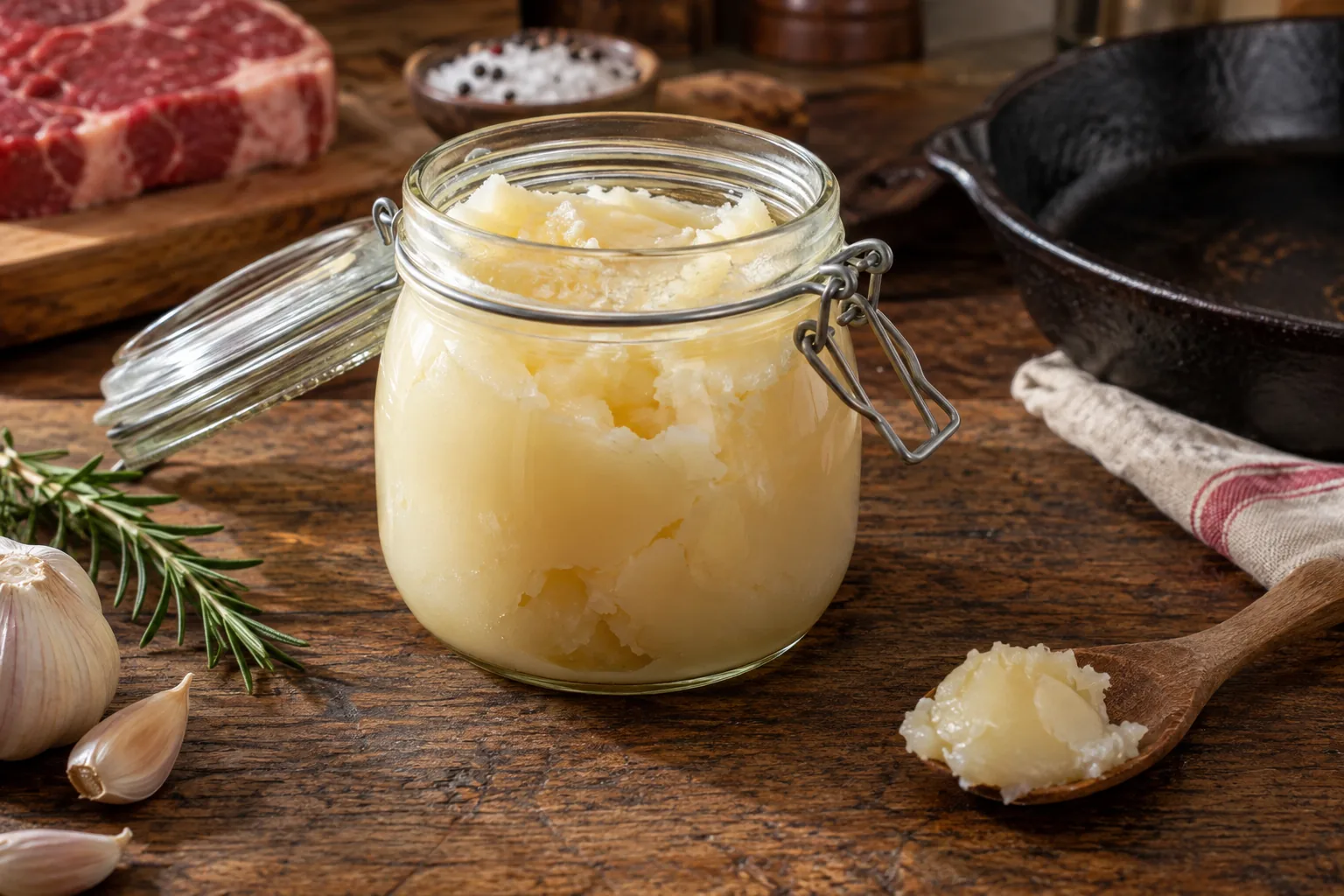
Homemade beef tallow.
In Romanian, this is seu de vită or untură de vită. Slowly rendering clean beef fat is a practical old kitchen method for saving a flavorful cooking fat. “Lard” usually means rendered pork fat; this version comes from beef.
- Ingredient
- Beef fat
- Method
- Low & slow
- Time
- About 2–4 hours
Ingredients
One small batch
- 2 lb (900 g) clean beef fat or suet
- 2–3 tbsp water, just to start the pot
Equipment
Heavy pot, fine mesh strainer, clean cheesecloth, and clean dry glass jars.
Mira's note
Ask the butcher for beef suet, the firm fat around the kidneys, or clean beef fat trimmings. Suet makes a milder tallow.
Render the fat
Trim and chop
Keep the fat cold while you work. Cut away meat, blood spots, and connective tissue, then chop the fat into small, even pieces. Smaller pieces melt more evenly.
Start gently
Put the fat in a heavy pot with 2–3 tablespoons of water. Set over very low heat. The water helps prevent scorching at the beginning and will evaporate as the fat melts.
Render slowly
Cook uncovered on low, stirring occasionally, for about 2–4 hours. Keep the fat at a gentle melt, never a hard fry. It is ready when the liquid fat is clear and the remaining pieces are small and lightly golden. Time depends on the size of the pieces and the heat.
Strain carefully
Turn off the heat and let the bubbling settle. While the fat is still liquid, carefully pour it through a fine mesh strainer lined with clean cheesecloth into a heat-safe bowl. Hot fat can burn, so pour slowly. Strain a second time if you see bits remaining.
Cool and store
Pour into clean, completely dry jars. Let cool, then cover and refrigerate. For longer keeping, freeze in small portions. Use a clean, dry spoon each time, and discard it if it develops an off smell or visible mold. Do not treat this as a home-canned, shelf-stable product.
Use a spoonful to roast potatoes or cook vegetables, as you would any cooking fat. A little goes a long way.